Last night's Oscars saw musicians John Legend and Common win the award for Best Original Song after they composed and performed on the soundtrack for Martin Luther King biopic 'Selma,' which documented the struggles of the civil rights movement.
But whilst the song is a powerful one, it was their acceptance speech that rattled cages around the world.
I learnt a lot from their acceptance (their real names are John Stephens and Lonnie Lynn?!) but the main brunt can be summarised in a quote from Mr. Legend's half:
"We wrote this song for a film based on events that happened 50 years ago, but we say that Selma is now, because the struggle for justice is right now. [...] We know that right now, the struggle for freedom and justice is real: we live in the most incarcerated country in the world. There are more black men under correctional control today than under slavery in 1850."
First of all, this statistic is true, but as pundits have pointed out, slightly misleading - the use of the term 'correctional control' includes not just prisoners but people on parole (i.e. not in prison just right now.) But despite this adjustment, Legend's point stands: that there is a problem - and it's not that the prosecution system has improved over the past 165 years.
When faced with this fact, many people flocked to Twitter to espouse something along the lines of this little nugget of wisdom:
"If so many black men are going to prison, maybe they should stop committing crimes! Duh! Problem solved."
Now the reason this is such a popular opinion is because of how easily digestible it is. It makes perfect sense, right? Don't want to go to prison? Don't be a criminal! But despite sounding entirely sane (and I've no doubt that people who hold this opinion are reasonble people) it's a dangerous response that negates the entire point of his speech: that there is a problem in America.
What Common & Legend cleverly did was indicate that there was a problem without saying expressly what is causing it; a difficult topic that they left everyone else to debate.
The most obvious is that the system is inherently racist, and there's good evidence to suggest this: if you are black you are likely to get a 20% longer sentence for the same crimes than a white man, and 25% less likely to be given sentence below guidelines. Before we sip our tea and shake our heads condemingly, this isn't just a problem in the U.S. either: black and Asian criminals in the UK are 20% more likely to receive jail time than white ones.
This doesn't begin to answer why so many black men are convicted criminals in the first place, but that topic isn't as hard to explore as it may sound.
Aristotle is quoted as saying that "poverty is the parent of crime," and throughout history we have more statistical correlations to prove this than... well... black prisoners. Simply put? It's tough being black in America.
In 2013, more than 11 million black Americans were living below the poverty line.
If you have a 'white sounding name' on your job application you are 50% more likely to get an interview.
Your average American black man earns 25% less a year than his white counterpart.
So my response to that response: should black people stop committing crimes? Yes. Should we appraise the system to check for systematic oppression before we condemn them? Yes.
Rooftops are shaken, dogs bark. The conservative Tories in their conservatories emerge blinking into the evening air to find out what the bloody hell the racket is all about.
You can hear it land in the distance. Some come to the streets to go and find out where, and in the living rooms, you can imagine the people looking out and asking 'Don't they have anything better to do?' whilst Paddy or Ant or Dec or Jeremy shout on the television.
The locals are stirred. Drama seldom comes to visit Fleet, and when it does, it is treated as a carnival. Responding officers reassure the people: 'Nothing too dramatic.' Someone needs surgery. An ambulance wouldn't get him to Southampton Hospital fast enough.
Someone, somewhere, despite the official reassurances, finds this dramatic.
The generation of content-generators set to work. iPhones are held up in that familiar craning arm seen often at concerts and car crashes. They point out something of interest, something worth documenting.
'What's the ISO on that?' one camera man, holding up a lens longer than his forearm, snidely asks another. He doesn't respond. Cameras, much like other phallic objects, are cared about more by men who worry about whether or not they're using them enough.
Murakami taught me how to live alone: go food shopping and get a case of beer with your groceries. Don't eat things if you don't know where they came from or how they're made. Read a book once in a while.
Remember that sex isn't something you can use to judge yourself or judge other people. It rarely reflects on those involved, it just happens sometimes - like rain in Summer, or sunshine in Winter. Enjoy both. Never become too attached.
Cook nice things, even if you have to burn a thousand slices of toast and occasionally live off of instant noodles. Go outside once in a while.
Realise that exercise is necessary. This might mean jogging on the spot in your room because you can't breathe well enough to run, or doing sit-ups alone because gyms are expensive and frightening. Take care of your body. It's going to belong to an old person one day.
Never turn down friends to do something that can wait. You don't know how lucky you are until they stop calling.
If someone is sat on the side of the street in the cold, asking you for money, have the courtesy to apologise if you don't want to. Better yet, give them some change, without being condescending and worrying about how they're going to spend it. If you don't need something, find someone who does.
Realise that Store Cards are there to make money for that shop. Care about your appearance, but not so much that you find yourself in debt.
Meet new people, and be there for those you already know. Love one another.
You'll notice that the phrase 'unrequited love' has been around a lot longer than this concept of 'the friendzone.' There's a reason for this.
The concept of liking someone who doesn't like you back isn't exactly new - it's a stale form of heartbreak that has inspired countless works of art over the centuries. But the concept of the friendzone (and particularly the material used to interpret and explore it in popular culture) is a sour addition to this idea.
The friendzone, in its purest form, tells us exactly how obsessed with sex we are in Western civilization. The idea that you should only be friends with an attractive girl - because let's face it, nobody seems to complain about men putting people in the friendzone - is not only laughed at, but is seen as a form of torture put to us by those fiendish ovary-coveting creatures known as women.
If you're one of those people who regularly laments 'the friendzone,' you've probably heard of women before - those people that your Mum has over for tea and conversation sometimes, those members of the population that grew lumps on their chests when you started secondary school, the ones that you've heard rumours about not having the same bits as you.
That's the thing about the concept of 'friendzoning' - it's innately hostile to women. How dare she not want to be more than friends! It's not a choice, if we're to believe pictures on 9GAG and enraged forum posters. It's an insult.
The idea gets yet more absurd when you look at it from the perspective of any person who isn't heterosexual. I personally like men AND women - and boy would you believe the amount of friendzoning that gets me. If I were to take offence at every person that I find attractive not wanting to reciprocate that, I'd surely get arthritis from all of the spiteful tweets and vengeful 4chan posts I would be forced to make.
But you're reading this, and you're begrudgingly agreeing, because in the past you've liked someone who has admired you but not enough to have a romantic relationship with you. You got frustrated, you wanted more - hell, maybe you even tried to express your feelings, and if so, good on you.
But say she still wasn't interested, and you were left at a crossroads. At this point, you either get sour, or you get wise. Say you get sour - you blame it on her, you blame it on the friendzone, you go to support groups, you go on WikiHow and read their article on how to get out of the friendzone.
Or you get wise. You realise that this is part of growing up, and that if you lived your whole life like this, you'd have a tough time coexisting with attractive people. That maybe, just maybe, the friendzone doesn't exist.
On a recent writing job, I went through the profiles of some of the biggest companies and corporations in the world. For the job at hand I had to cherry pick the good points, but I took in a lot worrying information as well. Out of all the consumer companies I looked at, only one - which for legal reasons I’m not allowed to name - had an acknowledged, functioning responsibility to the environment and the world around us – in other words, a business plan that took responsibility for its actions without neglecting product or service quality.
I live in Southampton. Not a mile from my bed is the Port, wherein ships filled with cargo and passengers come and go, all through the day and all through the night. When I’ve nothing else to do, I go there. I look at the ships, the ferries, and think of all the thousands of people on board these vessels. I think of all the cargo, and how strange and wonderful it is that all these passengers, and sailors, and commodities, have come all this way. Long-time readers might even remember an incident in which I drove a completely-assembled kitchen to a dock in Holland.
However, it only recently struck me that all this global infrastructure might all be unnecessary.
Retail website Made Closer is a company with social responsibility written into its constitution, founding itself on the principles of ‘progressive localism.’ As a person who scorns ‘localists’ who stand in the way of wind turbines so that they still have a nice view to look out on, I was sceptical at first, but the more I read, Made Closer’s ethic of selling you the product you want from as close as possible seems to make more and more sense.
Founder John Palaguta-Iles is a self-confessed ‘craver of convenience.’ Like many of us, he would rather go to the same website every time to buy whatever it was he needed. His idea relies on the fact that if there were someone near you who did the same job for a better price and gave some of that price to charity, you would go there.
Multi-national companies pour money into advertising and marketing to make themselves the most obvious and easiest option, immediately putting themselves in front of local businesses. To make it worse, prices for high street locations are soaring, making it impossible to start a shop without a huge income or a risky loan. These things make it hard for would-be ethical shoppers to support the businesses that need it – but with the help of Made Closer, it doesn’t have to be difficult.
The website acts as any other online retailer does, letting you search for products and giving you people who make them locally. As the amount of manufacturers signing up to the site increases, so do the products. Whether you want thermal underwear or handmade iPad cases, they’re right there on the site.
A functioning, ethical, online retailer? That’s not even the best part. Made Closer gives two thirds of its profits to charities that it lets the customer choose. Still not convinced? Previously, John Palaguta-Iles has run companies that have turned over £15-20 million a year, making Made Closer not only a good idea, but a good idea in the right hands.
People who are conscious of the realities of our big business economy tend to be rather pessimistic about things - and rightly so. What Made Closer brings is a sprinkling of forward thinking.
Ask your average man or woman in the street and they will probably tell you that a Buddhist is a mysterious creature that lives in the mountains (probably in a country such as Tibet or Nepal,) wears brightly coloured robes, and hums a lot.
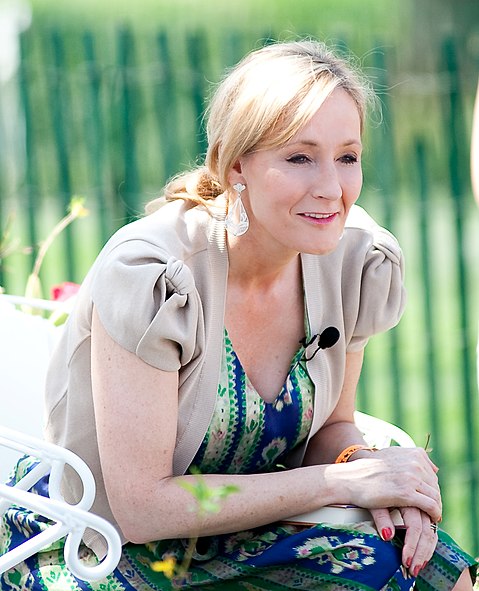
J.K. Rowling is easily one of the sweethearts of the publishing industry, having not only created a world of much-loved characters, but also having stood up for the little man, making her views on tax evasion widely known.
But if that small display of opinion-holding wasn't enough, Jo-Ro has stirred up a veritable fan-base shit-storm this week, by admitting that Harry Potter characters Ron and Hermione shouldn't have been married after all.
Talking to Emma Watson in an interview for Wonderland (an interview I could only guess was fraught with awkwardness) she admitted that the pair ended up together "for reasons that have very little to do with literature and far more to do with me clinging to the plot as I first imagined it."
The interview led many journalists to realise that the word 'Hermione' doesn't actually come up on spell-check as a real word, and many die-hard fans to cry into their first editions.
More importantly, the story brings up many debates of authorship - mainly the degree to which an author has the sole property of the characters or story that they created. Young adult novelist John Green is often quoted on the subject, saying of his books:
“They belong to their readers now, which is a great thing–because the books are more powerful in the hands of my readers than they could ever be in my hands.”
This idea was explored on it's head in his most recent novel The Fault in our Stars, in which literary novelist and drunken bastard Peter Van Houten is followed to Amsterdam by a fan of his novel intent on finding out what happens to the characters in his book after it finishes. Being the drunken bastard he is, Van Houten makes a point of reminding her that the characters don't exist beyond the end of the book.
Rowling-gate also brings up a point of realism. Her regrets bring to light questions of whether or not the characters would have been compatible at all, going as far as to say that the pair would have likely needed marriage counselling, (an idea that might provoke a scoff from people with a distant relationship with fiction.) Is realism this important however? With the fan-base for the series being the record breaking size that it is, Rowling foresaw " the rage and fury it might cause some fans" - opting nonetheless to be honest about her feelings.
Personally I can sympathise with Rowling. As a person who has spent hours of my life putting to paper events, people and worlds that don't exist, I really do get the idea of writing things as I first imagined them. Nothing compares to knowing a character so well that you can conjure up facts about them with a convincing confidence.
However, with the considerably less amount of experience I have in the craft, I don't know where I stand in terms of letting what I imagine and what would really happen see eye to eye. Either way, it's evident that realism is hugely important: even if you write about wizards for a living.
It’s official, I’m rejecting people. I’m going to sit in the dark for… most of the time. Wall-E will be my only company. If old friends come by they’ll say ‘But Lewis, you hate Disney!’ And I will tell them to go away and throw empty Nutella jars at them until they do. Wall-E serves as a wistfully palatable criticism of consumer culture; you just haven’t realised it yet.
In a few years, the only people who will care will be VICE journalists looking to write a shocking article about the man who ‘REJECTED REAL PEOPLE IN FAVOUR OF AN ANIMATED ROBOT.’
I will be like the Captain of the Axiom, sat in a darkened room, sleeping and getting fat until I’m needed.
I will rely on the sun for Vitamin D. I know I’ve got at least that much of my nutrition covered, because the guy in the film Oldboy said that’s where we get vitamin D from and it helps boost our immune system. I haven’t yet checked what nutritional properties Nutella has in it, but it’s got ‘Nut’ in it and so does nutrition so there’s obviously some.
Someone will have to pay the rent on my bedsit for a few years so the landlord doesn’t bother me. In return, I may or may not produce a saleable manuscript for a novel worthy of a Nobel Peace Prize, the proceeds of which I will happily give you in return. I’ve already got a working title, actually. ‘Nutella and Robot.’ Like I said, it’s a working title. We can change it if needs be.
Domino’s deliver, and also do vegetables all sliced up and ready to eat on top of the pizza itself. The only problem will be getting them to the door of my room. Maybe I will have to come to an arrangement with the landlord. Maybe my benefactor will have to pay for these daily pizzas as well.
I don’t know. I haven’t quite thought this through yet.
Josh walks into the kitchen, headphones in. Immediately, I tap an open copy of Shortlist on the table.
‘You see this? I fucking told them,’ I say. Inside the magazine a guy (dressed tastefully in a navy sweater, blue jeans and blue brogues) lounges on some stairs. ‘I told them monochrome was coming back in.’ Josh doesn’t respond. Instead, he turns on the kettle and begins to stair absent-mindedly out the window.
‘Still raining.’ I take it upon myself to fill the silence. ‘It’s like an absolute monsoon out there. Went out to get my post earlier and was only outside for what, a minute? Completely drenched.’ He seems to be nodding. Either that or his head is slightly moving back and forth, I can’t quite tell. I tap the magazine again, reinforcing my point. ‘This though. They never listen to me.’
‘I think Ani might have died,’ I say. ‘I texted her to say that Space Jam is on LoveFilm. No response. Probably a heart attack.’
The kettle boils and Josh starts to make a cup of tea. I take to scrolling through my phone instead. Like a flame, a complaint strikes up in my mouth.
‘Friend on Facebook just posted a status: “omg in such a bad mood” with a little sad face.’ A flicker of recognition flashes across Josh’s face. I’m not sure if he’s just thinking about adding another sugar. ‘Why do people constantly feel like they need to notify us how they’re feeling? What’s wrong with just… I don’t know, keeping things to yourself?’
Josh adds a dash of milk and makes towards the door. I look back at the guy in the magazine – is there a slight blue tinge to his hair? This is ridiculous.
‘I’ll see you later.’ Josh says. ‘I’m going to go smash my head against the desk.’
Monday is Funday. Perhaps First-Time Friday would have made more sense given the circumstances; but nonetheless, it was decided today that Monday would be the day that we took time to chip away at the ever-growing bucket list.
Today was concerned mostly (but not entirely) with making holes in peoples bodies.
In a world largely concerned with things that are on offer, tattoo and piercing parlours have gotten smart. Too smart, in my opinion. The 2-4-1 deal that we all know and love, it turns out, applies to nipple piercing, as if a nipple piercing was something you might only get one of. That said, I can't speak with authority on the matter, never having had or wanted one myself.
Unlike Grace.
We marched along to Asgard Tattoos & Piercing of Southampton, wherein Tom booked a tattoo (His first First Time of the day) for a bear on his ankle, which is now going to happen on Thursday (a sight which I can't wait to see, given that he gets hilariously freaked out over games of FIFA.) In case you were wondering, they run a very professional and polite establishment.
Grace got her nipples pierced - yes, both of them, thanks to that aforementioned deal - an ordeal which she later described as 'It's really cold, ow, erections are happening.' I never suspected Grace of being the sort of person up for such endeavors, and am not entirely sure whether I'm a poor judge of character or whether she genuinely isn't the sort.
Whilst all this was going on, I achieved a first. The opticians called with the news that my glasses were ready - at an opportune time as well, given that I was a quarter of an hour away from a lecture, which without the aid of glasses usually results in an attention shattering migraine. I popped into the branch five minutes later, picked them up, and now I have a very trendy pair of eyeglasses.
Later, Tom appeared still in the piercing sort of mood. But the shop was closed. 'Tom, don't look at me that way. I'm trying to cook my dinner.'
Cue our second firsts of the day. This mainly involved me trying to balance cooking dinner with pushing a piece of cold metal through Tom's ear whilst he yelled at me (as though it were my idea. Which it wasn't, for the record.)
Generally speaking this wasn't my first go at ear mutilation - I harked back to a simpler time, back when stretchers had just come into fashion. That old chestnut can easily be summarised with the quote 'Lewis, I can't do it, you do it - [screaming].'
This time wasn't so traumatic.
Grace assisted with the pushing and the puncturing and the disinfecting and putting an apple behind the ear (a trick she apparently learnt from The Parent Trap, of all things.) We filled in the bloody gap with a fox/wolf/generic-beast earring that he had bought, until he decided that it looked 'gay,' prompting us to push a whole new stud through.
If I go a whole year without having to puncture another human being, I won't be saddened by it. On the bright side, this whole situation gave a great opportunity for a selfie with my new glasses.
I know what you're thinking. And I want
you on my Pictionary team too.
People are always asking me: 'Lewis, how do you juggle keeping up that beautiful bonnet of hair you have with the tolls of being a noncommital socialist who doesn't want to be pigeonholed but nonetheless identifies to many of the stereotypes of the modern anti-capitalist thinker?'
Well folks, I think it's about time I gave an answer.
Here's some science: hairdressing. I know what you're thinking: Hairdressing? Science? But aren't hairdressers meant to be really stupid? Don't they just want to know where you went on your holidays? No.
Here's the deal with hairdressers: they're kinda like computers. They serve a function, yes, and on the outside they look simple enough, but if you cut into them, they're full of cables and wires and circuit boards and stuff.
Back up.
What I'm trying to say is hairdressers are full of hidden knowledge.
Let's go back to the basics. Shampoo is evil as shit, right? That stuff is like heroin for your scalp. Sure, it makes your hair all nice and fluffy/shiny/sparkly or whatever, but after a day or so, your hair goes all greasy again and you have to buy more shampoo - and nobody wants to look like they washed their hair with an oil derrick just because they want to shun capitalist urges. Shampoo does this because - and brace yourselves, because I'm going to use some serious scientific terminology - chemicals fuck with your body.
If you're reading this in 1960, I'm sorry if I dropped that bomb prematurely.
I stopped using shampoo and stuff last year, instead opting for a hot water regimen to keep my hair looking lovely, because being a Marxist shouldn't mean you should be any less fabulous (Do note, when you start washing your hair like this there is a day or two of greasiness - this is your natural oils overcompensating as a reaction to shampoo). For some people, shampoo simply makes the problem of grease worse, and a shampoo-free life is the alternative to twice-daily washes.
You'd be surprised how many people live like this, because nobody ever mentions it. This is because people are dicks. As soon as you come out of the closet for not using shampoo, for about five minutes, everyone in the room treats you as though you're a homeless person who just materialised in front of them. Once, someone sniffed me.
Surprisingly, this led to me mentioning it as little as humanly possible. However, one time when it is appropriate to mention your hair care regimen, is when you're at the hairdressers. Because, like I said before, hairdressers just cutting hair is a bit like brain surgeons administering plasters.
As an example of some of the wisdom a good hairdresser can bestow upon a Fabian with an image to uphold, here's some advice I picked up upon my last visit to the beauty parlor:
1) Stroke that shit.
When massaging your hair in the shower, don't get too into it. No, not like that. Massaging your scalp opens up the pores, and encourages oils to escape. So be gentle.
2) End it on a cold note.
Warm water also opens your pores. If you have the luxury of a shower with heat controls, you can give your hair a cold rinse to close them up again. If you shower in the mornings, this also helps wake you up.
3) Drying.
The heat rule also extends to drying - use either a light towel dry, or a cold/medium temperature on your hair dryer.
I was walking through the park and it had been an okay day. Nothing special, but nothing went wrong either, and it's always important to count your blessings. I remember the sky was looking a bit dreary, and in retrospect, I had been in a daze all day long. Nothing seemed to affect me. If eyes were really the windows to the soul, it probably would've looked like I had misty white cataracts.
You know how some words are inherently better in certain accents? There were a pair of Jamaican guys sat on a park bench, and apropos of nothing, one of them enthusiastically shouted 'Booker Dewitt!' as though he were calling out the name of a messiah. Maybe he was a big Bioshock fan, I don't know. All I know is, in that accent with that particular intonation, it sounded more like 'Booker Dooweet!' and that this surprised me and made me smile like a lunatic in equal amounts.
Further on through the park I saw a second important thing. A woman rode past me on her bicycle. She had a big black coat on and a woolly had with dangling bobbles from either side. Either arm was held down by a carrier bag from what I assumed to be a wholefood store, but I only caught a glimpse of the bags. She really looked like she knew what she was doing, like she could handle herself and life was going well. Sometimes I do my shopping on a bike, even though the supermarket isn't far. I couldn't put my finger on it at the time, but she made me smile. Looking back, I think it's because it reminded me of Holland, and the way everyone there rides their bikes everywhere, for every occasion. To shop, to go nightclubbing, to work.
Later on, I was in the Student Union bar. I wasn't drinking, I barely have enough change for the newspaper. Dave Grohl came to me in a vision and I don't really know what it was he was trying to say but the way he was saying it you really know he meant it and it was so beautiful and that things were starting to make sense and I nearly cried and then I could hear distant echoes of Bianca asking me if I was okay and then her hand waved in front of my face and Dave disappeared.
It was Bianca's first Guy Fawke's night and she was very excited. When we left the Student Union, a big purple firework went off in the sky in front of us. It felt like a scene out of a corny romance, except we weren't sharing an intimate moment and the firework wasn't a metaphor for our souls touching. At least I don't think it was.
On our way home there were more fireworks visible across the parks. This made Bianca really happy, really excited. Happiness is like heat, it conducts. I saw how this celebration I had seen countless times was so fresh and brilliant again, and it made me happy. It had been a touch and go day. My eyes were misty and my brain had emotion fog. But the little spikes of happiness, like tokes on an imaginary cigarette that lasted all day, seemed so much more important and profound because of it.
I moved in to a small room in Southampton opposite a congregation of parks. I've been here two weeks now, and whenever I've been given the opportunity, I've patted out the limits. In cities, everywhere is so immediately close, and when you're fresh in town you're surrounded by an intricate network of things.
Some of them are bad things. Students like to focus on bad things; it gives a good sense of mythology and folklore. After dark, everything looks at least 20% scarier. Behind us is an estate block, looming up in the dark, and a row of shops that probably have some very good deals but look incredibly shady once the sun has gone down. Even the parks turn evil. During the day they're pretty - for a while there were tastefully decorated rhino statues, people playing football, greenery, hobo fights. At night, a park just on my doorstep becomes known as 'Rape Park'.
I didn't take stock in this - what better place to set a horror story than in a place just outside where we live, in the dark of the trees? And during Freshers Fortnight - a two-week period where clubs will try with all their advertising might to get you to spend your money on Jagerbombs and vodka-mixers - it seems feasible that there are going to be a lot of drunk young potential victims walking home at night.
Saturday is my favourite day. Everyone is out in the town and there are markets and buskers and I get to do my shopping and sometimes ride my bike. I was making idle chat with someone on the way out of my room, and they told me the park had been cordoned off by police, so I couldn't ride through - it's the easiest way to get anywhere. I thanked them and went out. They were right.
Hoards of police were combing the grass, looking for something; I assumed it was a knife. People started saying there had been a rape. If they were looking for a knife, we thought, it was either going to be a stabbing or a rape involving a weapon. I told my friend how where I come from, there aren't police, and how different this was. A day later, police started asking around halls. The police spoke in their usual riddles, but it was clear: it had been a rape. Right outside my door.
The park seemed shaded with different crayons. I felt confused about things, and my head hurt a bit. It rained when I was on my way back from shopping. It's been a confusing week since. So many people saying so many different things and I've been trying to make sense of it all, trying to figure out the good and the bad and the nice and the nasty and if there's any chance I can write a blog post about any of it.
I went out to do my shopping this morning and town was busy again. On my way past the park I suddenly heard bagpipes playing. There was a whole band of bagpipes and marching drums. Just playing for us - not collecting money, not preaching, or promoting. Just playing. I stopped and watched for a while. Some people drove past and shouted to ask if they were wearing anything under their kilts.
It made me happy. Things started to make sense. The park, like the world, was random. Like flicking through television channels - you'll see different things, some good, some bad, and some depending on the time of day. It's random, it the most literal way. But if you stick around, something good might happen.
Name any given movie including nuclear weapons – ‘Dr Strangelove’, ‘Goldfinger’, ‘Superman’, ‘The Dark Knight Rises’ – and I can tell without looking that they don’t play a minor part. Since its gruesome entry into the world the atomic bomb has been a dramatic symbol of ungodly interactions by science into the world of man. It’s scared many a country into or out of war. It’s a game changer. It’s a referential point in our mind of complete chaos and destruction. It’s a narrative symbol. I don’t know much about politics, but I know a lot about films, media, fiction, that sort of thing. This might have something to do with my choices of subject at college and what I’m good at, but that doesn’t mean that there aren’t crossovers. For instance, what if I were to propose the hypothesis that Bashar Al-Assad – one man on one side of the ongoing Syrian civil war – dropped an atomic bomb on his own people? What would that change? Back in July, the United Nations estimated that 100,000 people had died in the Syrian civil war since it’s outbreak two and a half years ago. That estimate was before the chemical attacks in August, the estimated deaths of which are between 500 and a thousand. So why the comparison to nuclear weapons? Well excusing the fact that nuclear weapons are tightly controlled in today’s world and it is therefore unlikely that the scenario would actually be possible, the damage to human life has been equivalent. When the ‘Little Boy’ bomb was dropped on Hiroshima in 1945, the initial explosion and detrimental effects killed over 100,000 over the course of a year. Politically, that and the bombing of Nagasaki three days later ended the war that had killed millions, and so no further military action was taken – but consider the conflict since then that has been sparked by even the possibility of nuclear weapons. Of course, to simply discuss mortality in numbers in such situations is cold – to fully get our heads around the hypothesis we must also discuss what else separates the bombing of Hiroshima and the Syrian civil war. When Little Boy was dropped, it was a step into the unknown – a dark turn in human history. The survivors of the blast literally did not know what hit them – for days after the bombing, rumour circulated that ‘Mr. B’ (The affectionate name for the circling B-52 bombers) had dropped either petrol or some sort of chemical explosives which were then set alight by the towns tram network. The explosion was big, it was blinding, and it was silent. It was dramatic. The Syrian civil war has been going on for nearly three years, with no military intervention by the west. Like many a story that drags on without a happy ending, the news dropped for a while after the first few months of coverage. People continued to die, and us busy Westerners stopped reading, stopped watching, stopped caring. It wasn’t until recent chemical attacks that we shifted in our armchairs and got a bit hot under the collars as politicians started talking and we started asking ourselves – quite unassumingly – if we’d like to bomb another country again, as though we were simply diners pondering whether or not to visit the buffet table once more. The graphic videos and pictures that spread on social networking of people and children convulsing and foaming at the mouth from the attacks were much of what prompted calls for military action, and much more graphic than anything we've seen of Hiroshima. But as the Osundare poem goes, ‘What business of mine is it / so long they don’t take the yam / from my savouring mouth?’ Another thing to consider is our attitudes towards countries like Syria – the fact that we regard them as ‘others’ (See ‘9 Questions You’re Afraid to Ask About London’) the fact that we regard it as little more than an unimportant political country and therefore okay to be bombed. Of course we would see things differently if Assad dropped a nuke – maybe it’s because of what films we watch or maybe it’s because of more logical reasoning. What we need to remember is the paints that are used when our news is displayed for us. We need to ask questions beyond that of what on Earth the newsreader is wearing and where did he get that tie from – we need to ask things like: What makes us think we have the authority to bomb another country that poses no threat to us? What alternative measures are we faced with as a wealthy and democratic country? Do we care because we have heard the facts, or because we are told to care? I’m getting ahead of myself. I guess my point is watch the news – watch it as much as you can and pay attention to it. But don’t just watch, god knows all we do nowadays is watch – think.
-Lewis
(As a side note, thank you for reading. I haven't posted for a while despite having nothing else to do, but I caught a glimpse of my stats the other day and realised how many people check back every day. It kinda broke my heart. I feel like an abusive parent. But really, thank you.)
It's a good thing metal can't tell stories, because if it could, secrecy in the Royal Navy would be a completely different story.
HMS Ocelot, an Oberon-class submarine, was launched from Chatham in 1962. Less than thirty years later, the vessel was retired, and is now a tourist attraction back in it's hometown of Chatham Dockyards. The thing is, what happened in between those two points is very much a mystery. The words are never uttered explicitly by government documents, but the phrase isn't flinched at among sailors who know her - Ocelot was a spy vessel.
Many of the vessels in Chatham dockyard - or indeed any dockyard - have stories to tell. I stood atop the canvas-roofed helm of HMS Cavalier, and harked back to when the ship was posted in the Far East - with the power of imagination I could feel the hot sun beating down on my bare skin, I could look out over the dockyard and see the Orient. Aboard Ocelot I felt a much different feeling.
Living in cramped conditions was one of the more obvious disadvantages of being posted on Ocelot - the main living area (Sleeping, eating, entertainment, and all necessary furniture) was no more than four metres square, and housed 22 crew members. To add to that, there were portholes instead of doors, anyone taller than 5'9" had to bow their heads to avoid hanging pipes, and batteries and engines buzzed underfoot at all hours.
But as I traversed the cramped crusader I felt a very different dread as I imagined life on board.
When on board a spy vessel such as Ocelot, information of the submarines location in the world, and why it was there in the first place, was on a need to know basis - and this meant that for the large majority of men on board, nobody knew where they were in the world. To avoid being spotted, they were submerged underwater for most hours of the day.
In 1952, science fiction writer Ray Bradbury penned the short story 'No Particular Night or Morning'. It told the tale of two men on a spacecraft billions of miles from the planet Earth. Surrounded by darkness, one crew member begins to believe that whatever he cannot perceive does not exist, and drives himself crazy with the notion that his entire home planet is dead and nonexistent.
It sounds cheesy to say it aloud, but I considered life on Ocelot to be somewhat similar to the predicament of the spacemen in Bradbury's story. Submerged underwater without windows, the men on-board had no evidence or idea of what was on the other side of the metal walls that enclosed them together. They would have none but a vague idea of where they were in the world, and in much the same way, the outside world had no evidence of them. The crew of the Ocelot, at any time, could have found themselves not just stir-crazy, but at metaphysical odds with the world. Between the crew and the rest of the population of the world, there was an equal and opposite force of nonexistence for three months at a time.
I tried to think about what this meant. It seemed that all the romanticism of sailing in any conditions was sucked out by being in a submarine under this level of secrecy. Maybe my frets of nonexistence were just that of an over-read student, but this idea of secrecy perpetuating fear was reflected in the world of the time. The high-point of Ocelot's activity would have been during the Cold War of the 1980's. My father often recalls the fear felt on either side of nobody knowing what was going on.
When fears of nuclear attack became rampant in both Russia and the rest of the world, plans to protect themselves became near-fashionable. But down in the Ocelot, there could be no such plans. They could not dream of the outside world, and in the event that something did happen, it was kill or be killed: fire Trident missiles, or be hit and have to evacuate and make the 100 metre upward swim to the surface. And what then? Would crew members suddenly burst into a world they had never seen before?
It was a confusing way of life, and I thought for a long time about it. I guess I could bring it to some sort of philosophical conclusion, but what roused in me was a level of curiosity which could not be satisfied by any thoughtful meanderings. What was lived under the sea was a life of uncertainty and sparse definition. Any question I had could not be answered. And in the surroundings of a museum, that was what I found the most unsettling.
One thought had stuck out from my mind throughout the evening: 'This competition is run by monkeys.' Earlier that day, I had bought a meal deal for which I paid less than the printed price. In retrospect, that surprisingly cheap sandwich, crisp and drink combination served as a good metaphor for the day: it didn't make any sense whatsoever - but I didn't have any reason to complain.
It took about an hour to get down to Southampton, and when we arrived in the wet city, things were wet. This was because it was raining. A lot. Upon arrival at the venue, we were greeted and given a few nice freebies, which we took as a good omen. After all, we were there to be judged - judged on our film making abilities, after being entered into the competition for our film When Harry Met Svetlana:
After receiving a good reaction (And a little gold statue) from an audience the previous week, we were quietly confident that even if we didn't win an award, we would get a giggle - which, after all, is the reason we made it. It turns out, this was not the case. In fact - much to the confusion of us and the audience - this worked out backwards.
Upon arrival, there was free food, with which we gorged ourselves. A nice man came on and gave us a lecture about how important short films are - a fact that really isn't stated enough nowadays. He had nice facial hair, and we applauded him for it. He sat down. Playing along with the cinematic theme of the night, a man who looked a bit like Jeff Bridges in the first Iron Man came on and told us how many amazing pieces had been submitted (Which was true) and how hard it had been to shortlist them (Which I also guess was true, considering how many crap shortlisted ones and amazing unshortlisted ones there were).
The films began, each about five minutes long, and overall they made me happy - whilst there were the confusingly-bad-coursework submissions which seemed extremely out of place, there was an awful lot of good material, which - what with the film industry being in a bit of a pickle at the moment - certainly gave me hope for a creative future.
And then our film played. Well, I say it was our film.
We were being played in the level 2 category, and the mustard was being thoroughly cut by many of the submissions. We cringed as we came up, but then that cringe turned to confusion - there was something not quite right. In fact, 8/9th of the screen was not shown.
The film was originally shot (by accident) on a macro lens, which made it very hard to get the long shots we wanted. During the filming we were often crammed up against the wall with the camera in order to get everything in-shot. However, when screened, this problem was exacerbated - what we were seeing was an extreme close-up, which, as well as obscuring the subtitles and most of what was happening, obscured the punchline of the film. What we were watching was a confusing experimental film that we didn't make. And whilst they clapped at the end, for the duration, the audience were sat in a confused silence.
To put it lightly, we were pissed.
As Ben put lightly put it, it wasn't about winning, it was about having a fair chance. Visibly angry, we were patted down by the judges who reassured us that they would go backstage and rewatch the film properly. We were consoled, for the moment, and returned to our seats. All of a sudden, we were not having a good time.
In the interval, we were shown the films that were not shortlisted. I say this happened into the interval, but in fact it took the orangutans in the projector booth about ten minutes to make this happen. The vast majority of the films we were shown at this point, were great. 'How are these not shortlisted?' I whispered to Ben. 'This whole competition is being run by monkeys.' Before the awards were given, each film was given compliments by the judges. We were not sitting comfortably, at this point.
'When Harry Met Svetlana. Yes. We really liked this.' We were expecting some sort of explanation, or apology. The audience went silent in utter confusion. An ITV producer perked up:
'It was very avant-garde. I liked your use of close ups.' I took this moment to heckle.
'That was your crap projector!' I shouted. The panel looked up very worriedly, and fanned their hands in the air, reassuringly.
'No, don't say that!' they said, as if I simply had a low self-esteem. Ben looked at me, confused. It got to the awards.
'I know people always say this as a throwaway comment, but these awards were very hard to judge.' I knew this man was speaking the truth now, because the judging of the awards didn't actually seem to make any sense. In short, we were given 2nd AND 3rd place. As we made our way down the stalls to get our picture taken with the envelope, the audience were as silently incredulous as we were. I attempted (and failed, I think) to muster a smile for the camera as I shook the hand of Mr. ITV Producer and resisted the urge to headbutt him.
On our way out (A departure which we took as swiftly as possible) we attempted to summarise what had just happened. We came up with three possibilities:
1) The judges had seen our film in full backstage, but pretended for the crowd that what they saw was the real thing.
2) The judges had failed to see our film, felt bad, and awarded us the prize as a sympathy vote.
3) The judges genuinely liked the experimental film that we didn't make.
We wandered to the train station in stitches at the unlikely possibility that we had won an award for a film we didn't make. Tired, we sat in the train station. Munching a packet of crisps, we were still laughing, when Ben stopped me and pointed over my shoulder.
'It's Jeff Bridges again!' he whispered. The man noticed us and came up apologising. I asked him what had happened.
'The judges went to try and find your film, but they couldn't find the full version anywhere.' - this I found funny because it's on YouTube. 'But it didn't matter,' he continued. 'They liked what they saw.'
We were incredulous. Number 3 was right.
In a flurry of apologies, he told us he had told his people to pay our travel costs. Ben, who always turns down offers such as this, rushed to say no but I rushed-faster, being the scrounger that I am, to say thanks. Jeff Bridges said goodbye, and it was at this point that I realised that Ben had come down from Newark, racking up tickets costing £120.
Run down, confused, and unable to complain, we sat on the train. In an unlikely turn of events, we had won an award for a film we didn't make.There's a Woody Allen film, the name of which supplied the only thing that we knew to do:
Take the Money and Run.
"Americans have many questions tonight. Americans are asking, 'Who attacked our country?'. The evidence we have gathered all points towards a loosely affiliated group of terrorist organisations."
- George W. Bush, 2001
In April of this year, two pressure cooker bombs went off in Boston. As soon as reports were released, many people started, under muttered breaths, to say the word 'terrorist', or 'terror attacks', or - even more amazingly - were able to pin-point the exact colour and beliefs of the person or persons they supposed were responsible. Of course, as we all know, a few days later we found out that the two men suspected of the bombings were in fact white, and our fears of any possible terrorism that might have occurred were assuaged. As we all know, people with white skin simply aren't capable of bringing about terror, so it seemed we all got off terror-free.
Three years earlier, in 2010, a man named Raoul Moat shot three people over the course of three days and sparked a manhunt across the north of England. People in the area obviously felt less than safe, what with a crazed, armed man being on the loose. It wasn't news across the whole world, and the people in the area seemed resigned to the fact that they weren't even terrified by the whole ordeal. After all, he was a white man.
Today when I came out of the cinema and was picked up by my Father, I was told instantly that there had been news of a 'terrorist attack'. Instantly in my mind I had a vision of what had occurred - presumably, an Islamic fundamentalist had strapped a bomb to his chest and committed another underground train full of people to an early grave. I was only half right, of course, but it was my instant reaction that bothered me a few minutes later, when I realised what had happened inside my head.
When I asked him, my Father said that the last instance of a white man being called a terrorist was during the IRA bombings in the eighties. He was right, of course, about a nation being held in fear by the potential of being killed indiscriminately on their way to or from work - and that, we decided, was the definition of terrorism. That was a certain solidarity to start with, knowing what the word meant. The question was, how had I jumped to such an easy conclusion?
In a 2010 report into hate crimes against Islamic people in our country, researchers wrote that "anti-Muslim violence in the UK is predicated on the rhetoric and practice of the 'war on terror' that George Bush and Tony Blair launched against 'an evil ideology' in the aftermath of 9/11." The rise in Islamophobia in my mind is rightly attributed to Bush's speech after the bombings. I don't know about other people, but after growing up through the war in the Middle East, I read the word 'terror' in my head with a ghostily familiar Texas drawl.
Whilst the murder committed today fits all the predications of an extremist Islamic attack, what worried me about it more than anything is that by it being a murder committed under those circumstances, it became a terror attack. We were meant to be terrified by it. Simply by using one word, Bush and Blair's propaganda of times gone by was given a new edge, a fresh revamp, and we were kicked into being reminded that 'Terrorists are still among us'.
I am unaware of what terrifies me more. Am I more terrified by the fact that racism can be encouraged by the use of this one word? Or am I more terrified that people are so... well, dumb, that by having the word 'terrorism' thrown at them they can jump into action. In the report mentioned above, an incident was described in which a woman wearing a burqa was punched in the face by a random man in the street and declared a terrorist. And indeed, after today's murder, anti-Muslim protesters fled to the scene in order to shout racist rhetoric, chug beer, and sing songs underlining their hatred and ignorance.
What do I want people to get out of this article? Well, I hope it encourages moderation in the use of the word terrorist. I hope it helps people realise how one word can change their mind on a topic. But more importantly, I want people to know that if you blindly call something terrorism in front of me, I will vomit on you.
I got excited for my eighteenth birthday the way I get excited for most events nowadays - slowly, in a sad and dreading build-up for days and days spent telling my friends that I was turning eighteen and that it was going to be awful - and then, the course of the penultimate evening as a seventeen year old: all at once.
The reason for my dread, I still think, was a viable one. After all, eighteenths are just another birthday, if you don't take into account the amount of things which you suddenly become able to do - such as, for instance, be incarcerated in a maximum security prison. Besides that important cultural point, turning eighteen is very much just another brick in the dreary wall of getting slowly closer to the inevitable end. The light at the end of the tunnel, it has been said, is a train. Stop me if I'm sounding too sentimental.
All this would be fine, however, if it wasn't for all the people who suppose that it is something more than a milestone on the way to heavens door. These are the people, God damn them, who look deep into my soul with worry whenever I mentioned that I was dreading turning eighteen. I'm very sure they probably thought I was coming down with some sort of neurosis for not welcoming the HM Prisons invitations with open arms. Of course, I exaggerate - but they are guilty of the same crime.
On your eighteenth birthday, due to the huge amount of cultural emphasis put on it, you are expected to have (almost by law it seems) the most improbably wild time possible, mainly through the taking of previously illegal drugs known as 'alcohols'. Of course, what with me being the rugged urban outlaw that I am, I was already well acquainted with these drugs. I knew what they had to offer and I felt as though I was left with some great tradition that I had to carry on. The fact that I did indeed get very drunk and am in fact writing this with a hangover lying ruefully on my head, is entirely irrelevant to the journalistic integrity of this piece. My night in the Ham and Blackbird was purely investigational I tell you. The fact of the matter was, I didn't like that the birthday card I received from my dear sweet Grandmother was emblazoned with an illustration of a man running drunkenly from pub to club to pub to neon club. That, my friends, is the Death of Innocence.
So there I was, the afternoon before my birthday came stumbling around the bend, stood at a bus stop, attempting to figure out why I was dreading it's arrival so. A friend turned up. She inquired as to why I looked so glum, and so I filled her in.
Now, at first, she did indeed look shocked. And then, in a moment of realisation, her face reformed to the face of understanding. Alcohol, we asserted, was more fun when it was illegal. When what you were doing was perfectly fine within the eyes of the law, all the thrill of the matter was taken out. Not only was the arrival of this symbolic number the Death of Innocence - it was also the death of something much less simple, but much more enjoyable. Not only was this the representative of our common desire to rebel legally, it was a milestone of the government telling us it was suddenly OK to not be OK.
The event started the evening before, sitting with my parents in the living room with a cider. Living room. It made sense that what with the imminent arrival of the children on my actual birthday, we should relax and open my presents the night before.
I'm not a materialistic person, as has been evidence with several weeks of industrious throwing out. This presents an obvious challenge for people who wish to buy me gifts on birthdays and christmasses, but considering the very small amount I had said regarding my wants and needs, my parents did extremely well. I was succinctly pleased with the gifting. But there was a third gift - one which I had been waiting for for almost seventeen whole years.
The 'eighteen years box' is one of the unspoilable highlights of turning eighteen for me. On my first birthday, my parents asked members and friends of my family to provide objects with which to fill the box. It included various things - a journal documenting 1996, a membership to a stamp club I did not know I was a part of, my brothers first failed driving test and a mile-high pile of birthday cards.
My first birethday cards. Slugs and snails and puppy dogs tails, that's what little boys are made of. A simple time where every card I received wasn't encouraging me to get pissed. There were more important things to attend to, such as teddy bears playing trombones or soft-pastel drawings of happy rabbits. And the badges. So many badges. One today! One today! Me! One! Today! It was curious to remember blue hills. I may not have been happy - children are never contented - but I was one. Shit mattered.
Retrospection continued the following morning with a visit to my Nan. There was a cake. We hugged. I blew out the candles whilst people sang happy birthday and everything was good again. Even the candles had their smell. I was one year old again. She gave me the card on which a man stumbled from bar to bar. Sent me on my way. Young Emma gave me a card the envelope of which read 'LEWIS (how sad your 18)'.
Another card I received reads: '18 Year Old Buys First Legal Pint: Asks For Usual!'. It reflected, in a perhaps unintentional way, the fact that I had indeed already bought pints. But I must admit, there was a certain happiness to be found in flashing my credentials to the Polish barmaid.
The drunken night which ensued was littered with small acts of rebellion, almost as an elegy to rebellious youth. We jumped over fences. We jeered playfully at the Chinese takeaway ladies attempting to hold a straight face for the phone-in customers. I bought Sainsbury's Basics Cider for one (hopefully) last time. I mumbled incoherent thanks at the kebab van owner.
How sad I was 18? In the morning, very much so. The hangover came almost as a holy ritual and I knew it was my job to sit it out. My brother - also on a hangover - seemed almost sad that due to our states we wouldn't be able to go out for that fabled brotherly pint. But it was no matter.
As my hours of eighteen rolled on, I found myself chewing the mandatory chewing gum and sipping at the compulsory seltzer that eighteen years and one day finds you with. Without any seeming inclination, I moped around the house and kept myself busy. I tidied my sock drawer. Applied for a job in a bar. Got some work done. All without pomp and circumstance. I didn't even post a Facebook status.
It was strange. Too good to be true. Almost on cue, I was beocming an adult. Was I hungover? Evidently so. Did that feel like it was it? Not so much. As the day rolled past, I asked myself if this was eighteen. If this was adulthood. I wanted some sort of conclusion for this essay. But no. Time is not conclusive, and whilst it may heal all wounds, it does not answer all questions. At least not if you rely on trivial dates such as birthdays.
A year, I thought. One year of eighteen left. And then I could figure it out. The Big Day. A Day of Cards. How sad your 18. I'll have the usual mate.
Thoughts on old and new on my new old typewriter.
It is an understatement to say that at the time of writing this, the word 'hipster' is not one that many people wish to have attached to themselves. The word itself conjures up imagery of boys and girls in vintage clothing stores discussing albums of which you have never heard, pawing woefully between racks of clothing and sipping occasionally from their ethically sourced caramel macchiato, so much better than 'that immoral crap they pedal out to the drones at Starbucks, maaaaan.'
Indeed, despite being a style defined more by the ideology of simply doing things before they become cool (hence, I believe, the 'hip' in 'hipster') an entire cultural language seemingly apart from this ideology has been attached to the word hipster. Hipster. Hipster.
As an effect of the conjugation of these two philosophies, the word hipster has become a derogatory one, with an entire slack-jawed MacBook pawing archetype assigned to it, just like any other comedic stereotype. It seems to be, from a very superficial perspective, that as soon as 14 year old girls begin donning thick-rimmed glasses and declaring themselves 'hipster's, any historical meaning to the word in question becomes lost forever.
The earliest use of the word, to my undernourished knowledge, is in the novel On The Road, by Jack Kerouac. The book was introduced to me by a certain Mike Woodfine, a man who incidentally does not implore the usage of 'the H word' in much the same way that the British Nationalist Party doesn't like the use of the word 'racist'.
In the book, a road-tripping tale across America, Kerouac makes several mentions of the hipster breed, but interestingly never makes any effort to explain what they were like. Forever moping in the corners of bars, we're never given a proper explanation of what the word meant to people at the time, but the absence of this explanation is key - it tells us that even in the genesis of hipster, an image was already held in the minds eye of the populace - Kerouac didn't explain what the word meant simply because he rightfully assumed people would already know. It wasn't a character he created, just a cultural referential code. The question is; was it still derogatory then? Logic dictates that it did not hold the same cultural values then - unless the hipsters of Kerouac's gneeration sported turn of the century garb in an attempt to get that 'vintage' feel, the addition of cultural coding such as vintage clothing and a love for coffee and obscure bands has been a recent assertion in the eyes of society.
But as much as I would love to get stuck into researching the etymology of the hip kind; I must first admit that I began writing this essay with a slightly different agenda in my mind. That is, a defensive agenda. A reason why this would be a defensive essay is obvious, and that would be that it was defensive of myself - that I was offended that I fit the stereotype of a hipster and wanted to spend some time standing in front of your view of my retrospective wardrobe and commit to paper a bullshit argument about why I am not a hipster. However, this is not the case, as considering I am writing this on a typewriter whilst wearing corduroys that no place sells anymore, this is probably - if not anything else - a documentation that proves that I fit the hipster stereotype like a glove, my hip credentials like a drivers license made of pure pretentiousness. No, today I write in defense of something else entirely - the hobbies and various lifestyle choices which have become untouchable by people under the fear of being labelled a hipster themselves. In particular, I speak in defense of the world of vintage.
A few weeks ago now a very special object came into my possession. The object was an Agfa 35mm film camera. Being a photography student myself, it gave me an abject fascination from the moment I laid eyes on it. Dated around the late 1950's, the camera was the mechanical and physical embodiment of everything I had learnt about photography.
Besides the wonderful magic of a chunk of time that had been perfectly kept, the camera was a tool of learning. It adjusted everything I knew into a way that suddenly made so much more sense. I guess the easiest way to explain what it felt like is through the metaphor of looking at a family album for the very first time. The faces of dead relatives make you think about the ones which are still alive in reverse order. You suddenly become aware of who gave your mother those eyes you had seen hundreds of times and you realise that years before your birth someone came to that assertion in reverse. Hasn't she got her father's eyes? It's a shame I thought, that out of not wanting to be branded a hipster, I had neglected to invest in one of these beautiful machines. I felt guilty, in a way, that social ruling had held me back from learning about the past in this new way. I was unsure whether to be angry at myself or at others.
And now, as I think about times gone by on the most auspicious of times - my turning 18 - I bash away at the keys of my Brother typewriter. The typewriter; the honorable bicycle to a laptops supercar engine. The smug face of the cyclist as he feels the wind flow through his hair. Each slam of the keys sounding like a booming footstep down a hall of literary greats. On the walls looking down at me are the faces of men and women who have slammed these keys before, who have endured the wails of their neighbours protesting the clack of keys carrying on late into the night. Writing never felt so loud. It never felt so pulsating and angry beneath my fingers.
In the same way that holding the machine in my hands has taught me what was in the minds of the men who created the first computers, the machine has lent me to a world I had only read about before. In the same superficial way I had ran my fingers over the camera and given myself over to a time gone by, this beautiful machine has allowed me to play writer. Tonight Michael, I am Hunter S Thompson. Tonight Michael, I am Gay Talese. Tonight, Michael, mon cher, haven't you heard? I'm Tom Wolfe.
Balls to hipsterdom. In my bold typeface with my clacking tonight I am lost in fantasy land. It's a stronger pill than anything sold in any nightclub bathroom my friend. I'm no hipster, nope, not today. Tonight I am the greatest damn writer ever to have lived.
In an inevitable turn of events that has still managed to take many people by surprise; the fearless ferrous female known as The Right Honourable Baroness Thatcher has suffered a stroke, and died. If I'm the first person to break the news to you, I apologise, but I'm not here to talk to you about her death as much as I am here to talk about people talking about her death.
If for one moment I can digress in order to illustrate my point, I would like you to stretch your memory back to the merry month of May in the year 2011. At the time I was editing The Thought Report 2011, and was subsequently engaged in most of the big stories of the time - one of which happened to be a big deal. On the second day of month in Pakistan, a group of armed men broke into the house of a 54 year old man and shot him in the head at point blank range - his name was Osama bin Laden, and the general consensus around the world was that he was a very evil man.
But perhaps the most interesting element for me - and one that came up a few times in news stories that year - was the way in which people responded to his death. The citizens of hundreds of American towns and cities took to the streets in celebration of one mans death; it was a turning point and an almost symbolic retribution for the population, and people celebrated as such. This was to be expected, but at some points the celebration seemed too jubilant - almost vitriolic in it's nature. There were burning dummies and gore-filled banners, something that I personally didn't expect from a Western culture that reveres death in a usually very respectful manner.
From MiamiNewTimes.com
All opinions aside, it was strange, and I think a lot of people learnt a lot about themselves and others at that time. But the thing is, almost within an hour of Margaret Thatcher's tiny teeth biting the dust, my social networking feeds were subjected to a tirade of jokes, I was asked how I was going to celebrate her death, and invited to like a friend's page - duly entitled 'The death of Margeret Thatcher'.
When it comes to events like this, you can often tell what side of thinking you're most subscribed to - through social networking as well as through the media - but when it comes to The Iron Lady I've never needed, wanted, or had deep-set opinions about her. I'm stuck between a right-thinking Father who was very well looked after by her, and a group of friends who seem to have extremely negative views of the woman despite not actually being alive whilst she was in power; and thusly I've never thought about her too much.
But the thing is this - let's not let it be another Bin Laden. Of course, a lot of the joviality is simply in the British nature of getting over topical stories by poking fun at them, and I have seen a lot of people express themselves intelligently on the matter but for anyone who was really beginning to genuinely enjoy the death of an 87 year old woman, I'd like to end this post with a quote shared on my Facebook by a friend:
"I will mourn the loss of thousands of precious lives but I will not rejoice in the death of one, not even an enemy". - Martin Luther King