Wednesday, 5 March 2014

WHY 'THE FRIENDZONE' DOESN'T EXIST

Picture: www.coloringforgrownups.com
You'll notice that the phrase 'unrequited love' has been around a lot longer than this concept of 'the friendzone.' There's a reason for this.

The concept of liking someone who doesn't like you back isn't exactly new - it's a stale form of heartbreak that has inspired countless works of art over the centuries. But the concept of the friendzone (and particularly the material used to interpret and explore it in popular culture) is a sour addition to this idea.

The friendzone, in its purest form, tells us exactly how obsessed with sex we are in Western civilization. The idea that you should only be friends with an attractive girl - because let's face it, nobody seems to complain about men putting people in the friendzone - is not only laughed at, but is seen as a form of torture put to us by those fiendish ovary-coveting creatures known as women.

If you're one of those people who regularly laments 'the friendzone,' you've probably heard of women before - those people that your Mum has over for tea and conversation sometimes, those members of the population that grew lumps on their chests when you started secondary school, the ones that you've heard rumours about not having the same bits as you.

That's the thing about the concept of 'friendzoning' - it's innately hostile to women. How dare she not want to be more than friends! It's not a choice, if we're to believe pictures on 9GAG and enraged forum posters. It's an insult.

The idea gets yet more absurd when you look at it from the perspective of any person who isn't heterosexual. I personally like men AND women - and boy would you believe the amount of friendzoning that gets me. If I were to take offence at every person that I find attractive not wanting to reciprocate that, I'd surely get arthritis from all of the spiteful tweets and vengeful 4chan posts I would be forced to make.

But you're reading this, and you're begrudgingly agreeing, because in the past you've liked someone who has admired you but not enough to have a romantic relationship with you. You got frustrated, you wanted more - hell, maybe you even tried to express your feelings, and if so, good on you.

But say she still wasn't interested, and you were left at a crossroads. At this point, you either get sour, or you get wise. Say you get sour - you blame it on her, you blame it on the friendzone, you go to support groups, you go on WikiHow and read their article on how to get out of the friendzone.

Or you get wise. You realise that this is part of growing up, and that if you lived your whole life like this, you'd have a tough time coexisting with attractive people. That maybe, just maybe, the friendzone doesn't exist.

-Lewis


Friday, 28 February 2014

NOT MADE IN CHINA

On a recent writing job, I went through the profiles of some of the biggest companies and corporations in the world. For the job at hand I had to cherry pick the good points, but I took in a lot worrying information as well. Out of all the consumer companies I looked at, only one - which for legal reasons I’m not allowed to name - had an acknowledged, functioning responsibility to the environment and the world around us – in other words, a business plan that took responsibility for its actions without neglecting product or service quality.

I live in Southampton. Not a mile from my bed is the Port, wherein ships filled with cargo and passengers come and go, all through the day and all through the night. When I’ve nothing else to do, I go there. I look at the ships, the ferries, and think of all the thousands of people on board these vessels. I think of all the cargo, and how strange and wonderful it is that all these passengers, and sailors, and commodities, have come all this way. Long-time readers might even remember an incident in which I drove a completely-assembled kitchen to a dock in Holland. 

However, it only recently struck me that all this global infrastructure might all be unnecessary.

Retail website Made Closer is a company with social responsibility written into its constitution, founding itself on the principles of ‘progressive localism.’ As a person who scorns ‘localists’ who stand in the way of wind turbines so that they still have a nice view to look out on, I was sceptical at first, but the more I read, Made Closer’s ethic of selling you the product you want from as close as possible seems to make more and more sense.

Founder John Palaguta-Iles is a self-confessed ‘craver of convenience.’ Like many of us, he would rather go to the same website every time to buy whatever it was he needed. His idea relies on the fact that if there were someone near you who did the same job for a better price and gave some of that price to charity, you would go there.

Multi-national companies pour money into advertising and marketing to make themselves the most obvious and easiest option, immediately putting themselves in front of local businesses. To make it worse, prices for high street locations are soaring, making it impossible to start a shop without a huge income or a risky loan. These things make it hard for would-be ethical shoppers to support the businesses that need it – but with the help of Made Closer, it doesn’t have to be difficult.

The website acts as any other online retailer does, letting you search for products and giving you people who make them locally. As the amount of manufacturers signing up to the site increases, so do the products. Whether you want thermal underwear or handmade iPad cases, they’re right there on the site.

A functioning, ethical, online retailer? That’s not even the best part. Made Closer gives two thirds of its profits to charities that it lets the customer choose. Still not convinced? Previously, John Palaguta-Iles has run companies that have turned over £15-20 million a year, making Made Closer not only a good idea, but a good idea in the right hands.

People who are conscious of the realities of our big business economy tend to be rather pessimistic about things - and rightly so. What Made Closer brings is a sprinkling of forward thinking.

This post is sponsored by MadeCloser.co.uk

Wednesday, 26 February 2014

WHAT DOES A BUDDHIST LOOK LIKE?

Image: Clare Hudson
Ask your average man or woman in the street and they will probably tell you that a Buddhist is a mysterious creature that lives in the mountains (probably in a country such as Tibet or Nepal,) wears brightly coloured robes, and hums a lot.

For many people, this is not the case.

Click here to read the full article on ThoughtBrick.com

Monday, 3 February 2014

WHY RON AND HERMIONE WEREN'T MEANT TO BE

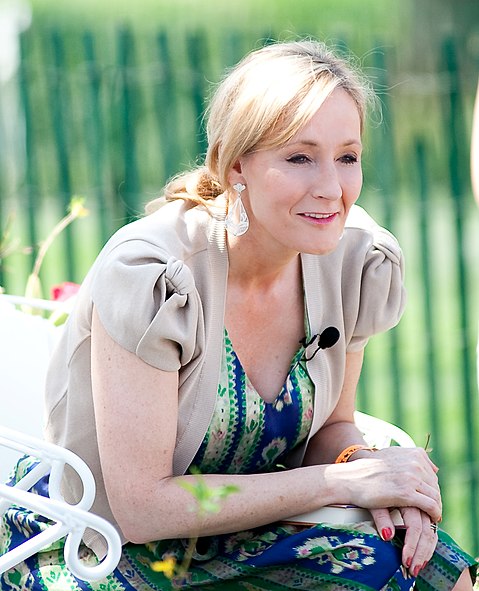
Photo - Daniel Olgren
J.K. Rowling is easily one of the sweethearts of the publishing industry, having not only created a world of much-loved characters, but also having stood up for the little man, making her views on tax evasion widely known.

But if that small display of opinion-holding wasn't enough, Jo-Ro has stirred up a veritable fan-base shit-storm this week, by admitting that Harry Potter characters Ron and Hermione shouldn't have been married after all.

Talking to Emma Watson in an interview for Wonderland (an interview I could only guess was fraught with awkwardness) she admitted that the pair ended up together "for reasons that have very little to do with literature and far more to do with me clinging to the plot as I first imagined it."

The interview led many journalists to realise that the word 'Hermione' doesn't actually come up on spell-check as a real word, and many die-hard fans to cry into their first editions.

More importantly, the story brings up many debates of authorship - mainly the degree to which an author has the sole property of the characters or story that they created. Young adult novelist John Green is often quoted on the subject, saying of his books:

“They belong to their readers now, which is a great thing–because the books are more powerful in the hands of my readers than they could ever be in my hands.”

This idea was explored on it's head in his most recent novel The Fault in our Stars,  in which literary novelist and drunken bastard Peter Van Houten is followed to Amsterdam by a fan of his novel intent on finding out what happens to the characters in his book after it finishes. Being the drunken bastard he is, Van Houten makes a point of reminding her that the characters don't exist beyond the end of the book.

Rowling-gate also brings up a point of realism. Her regrets bring to light questions of whether or not the characters would have been compatible at all, going as far as to say that the pair would have likely needed marriage counselling, (an idea that might provoke a scoff from people with a distant relationship with fiction.) Is realism this important however? With the fan-base for the series being the record breaking size that it is, Rowling foresaw " the rage and fury it might cause some fans" - opting nonetheless to be honest about her feelings.

Personally I can sympathise with Rowling. As a person who has spent hours of my life putting to paper events, people and worlds that don't exist, I really do get the idea of writing things as I first imagined them. Nothing compares to knowing a character so well that you can conjure up facts about them with a convincing confidence.

However, with the considerably less amount of experience I have in the craft, I don't know where I stand in terms of letting what I imagine and what would really happen see eye to eye. Either way, it's evident that realism is hugely important: even if you write about wizards for a living.

-Lewis